
Check these handy travel tips to help make your mountaineering experience in Peru more enjoyable and trouble-free.
Visas & Entry Requirements
If you are coming from Australia, New Zealand, US, UK, Ireland or Canada, you do not need a pre-arranged visa. If you are coming from France, Germany, or other countries, please check with the appropriate authority in your country prior to booking.
All travellers are given an Andean immigration card upon arrival. This card should be kept safe and with your passport, and must be presented on departure from Peru. Most nationalities are lawfully allowed to stay in Peru for 180 days.
Your passport must be current and valid for at least 6 months from the date of your departure.
Money
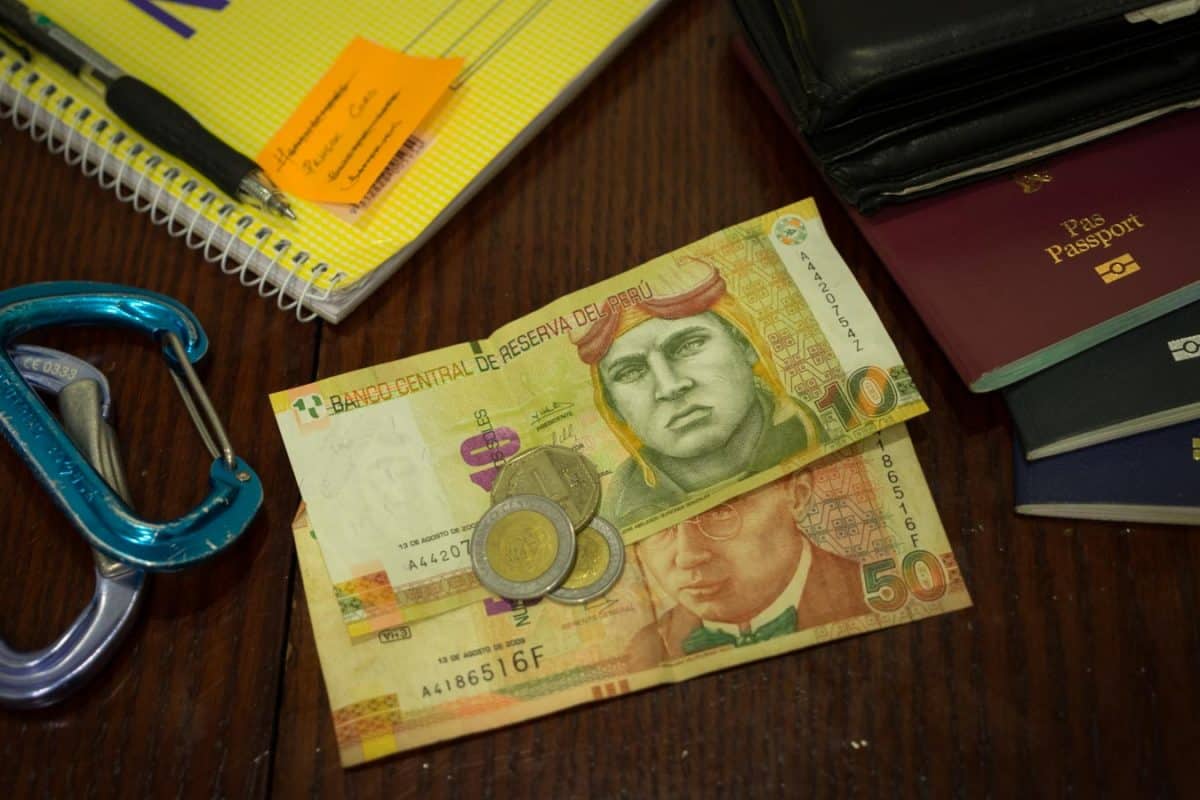
Peru uses the Peruvian Sol (PEN). Approximate exchange rates (check current rates before travel):
- 1 USD ≈ 3.3–3.8 Soles
- 1 EUR ≈ 3.7–4.2 Soles
- 1 AUD ≈ 2.25 Soles
- 1 NZD ≈ 2.15 Soles
- 1 GBP ≈ 4.2 Soles
You cannot purchase Peruvian Sol overseas — arrive with new bills in major currencies. Old or torn USD notes won't be accepted at smaller exchanges. There are numerous ATMs in Huaraz which accept VISA and Mastercard. Budget approximately $50 USD per day for meals and miscellaneous costs in town.
Insurance
Cover is compulsory on all Peruvian expeditions. You need two types:
Travel Insurance
Standard travel insurance covers your travel to and from Peru but will not normally include mountaineering. Purchase the most comprehensive policy available and buy it as soon as you pay your expedition deposit.
High Mountain (Mountaineering) Insurance
This can be acquired from the New Zealand Alpine Club, the Austrian Alpine Club, the British Mountaineering Council, Dogtag, and others. Check carefully for elevation restrictions. Carry a printed copy of your insurance documents in the mountains.
Health & Vaccinations
General Health
Staying healthy in Peru is usually straightforward:
- Only drink bottled water in town
- All water will be boiled for drinking, cooking, and dishwashing on expedition
- Be vigilant about where and what you eat
- Wash hands frequently; carry hand sanitiser
Each expedition requires a medical form completed in the presence of your doctor. Arrive in the best possible shape — hiking with a loaded pack (15–20kg) for 6–8 hour days is excellent preparation. See the Mountaineering Fitness guide for a structured training programme.
Vaccinations
Check vaccine requirements with your doctor prior to travel. All our expeditions are at altitude, eliminating many infectious diseases found lower in the jungle — but it's wise to be prepared.
Language
Spanish is the most widely spoken language in Peru, but approximately 13% of the population speak Quechuan as a first language. The people we meet in mountain villages will be delighted if you greet them in Quechua. Learning as much Spanish as you can will enhance your experience enormously.
Useful phrases: Buenos días (good morning), Gracias (thank you), ¿Cuánto cuesta? (how much?), Agua, por favor (water, please).
Getting There
Commercial flights to Lima, Peru's capital, are available from most major hub airports in North America, Europe, and other South American countries. LATAM operate flights from Sydney/Auckland via Santiago de Chile with connections to Lima. Air New Zealand fly daily to Buenos Aires with onwards connections.
From Lima, bus services to Huaraz (the base for Cordillera Blanca expeditions) take approximately 8–9 hours. Several reputable bus companies operate this route, including Cruz del Sur and Movil Tours.
A detailed description of travel from Lima to Huaraz will be provided once you are confirmed on an expedition.
Altitude & Acclimatisation
Huaraz sits at 3090m — well above the altitude at which acute mountain sickness (AMS) can occur. Our itineraries are designed with careful acclimatisation built in, but arriving in good health and at a reasonable fitness level makes a significant difference to how your body adapts.
Never underestimate acclimatisation. The mountains will still be there — patience at this stage pays dividends on summit day.